cast net
The cast net is a fishing tool that Santiago no longer possesses, having sold it during his long run of bad luck, yet its daily invocation by the boy Manolin becomes a ritual of shared fiction that sustains the old man's dignity and their bond.
Identity and Absence
The cast net is a circular throwing net used for catching sardines and other small bait fish. In the world of the Cuban fishermen who work the Gulf Stream, it is a standard piece of gear, essential for securing fresh bait before a day's fishing. For Santiago, however, the cast net exists only as a memory and a fiction. The old man has been forced to sell it during his eighty-four-day streak without a fish, a period that has marked him as salao, the worst form of unlucky. The net's absence is a concrete measure of his poverty and his fall from the days when he was known as Santiago El Campeon, the champion arm-wrestler of the docks.
The Daily Ritual of Fiction
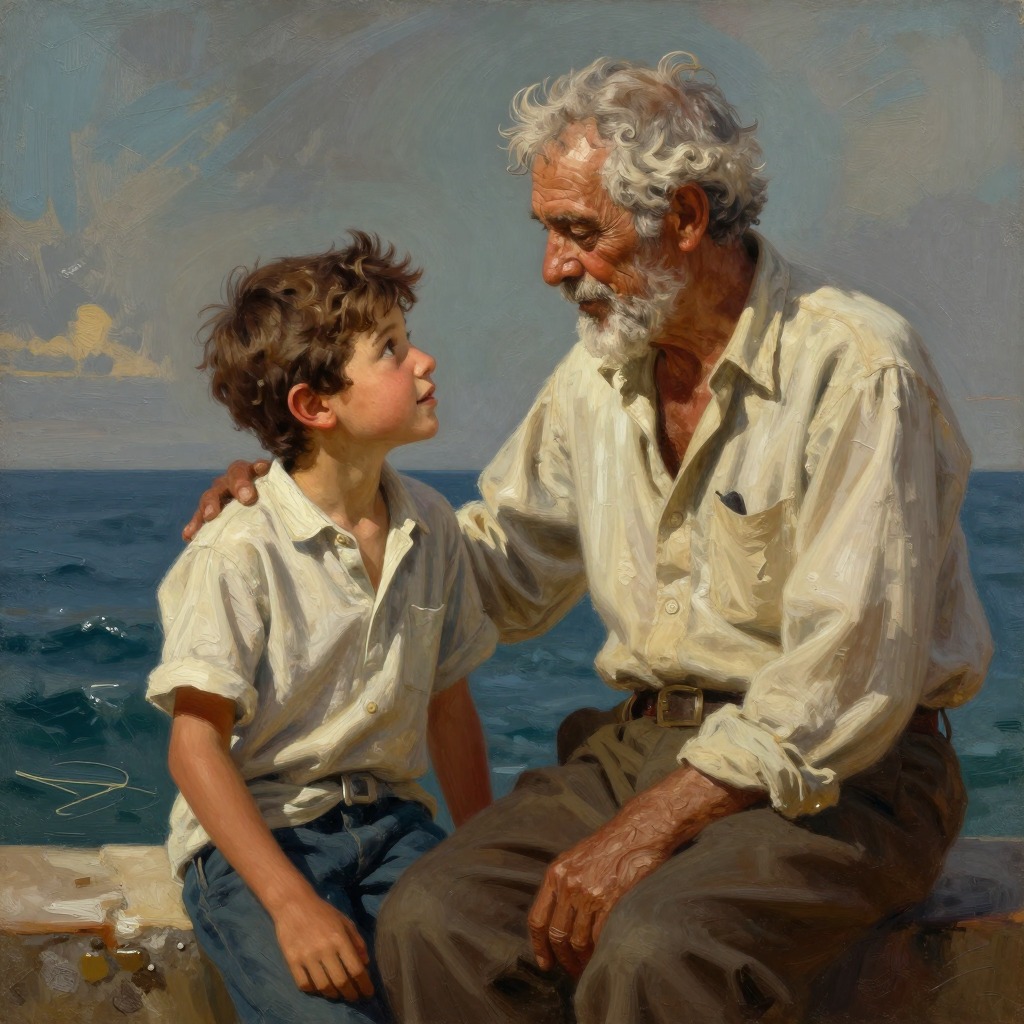
Every evening, the boy Manolin asks Santiago if he may take the cast net to go out for sardines. The old man, knowing the net is gone, replies, "Of course." This exchange is a deliberate fiction, a ritual both of them perform to preserve Santiago's pride and to avoid the painful truth of his destitution. The narrator explicitly notes that "there was no cast net and the boy remembered when they had sold it. But they went through this fiction every day." This daily lie is not a deception but a form of mutual care: Manolin offers the old man the dignity of pretending he still has the tools of his trade, and Santiago accepts the gift. The fiction extends to other necessities as well—the boy also knows there is no pot of yellow rice with fish, yet he asks about it, and Santiago answers as if it were there.
Connection to the Fishing Life
Though absent, the cast net remains a symbol of the practical skills and knowledge that define a fisherman's life. When Manolin offers to use it to catch sardines for the next day's bait, Santiago initially refuses, saying, "I can still row and Rogelio will throw the net." The net is associated with the work of a younger, more able man, while Santiago, now old and alone, relies on his own hands and the help of others. The boy's persistent offer to use the net—"I would like to go. If I cannot fish with you. I would like to serve in some way"—underscores his desire to contribute to Santiago's preparations, even if the net itself is a phantom. The fiction of the cast net allows Manolin to perform this service, maintaining the apprentice-master relationship that began when he was five years old.
Thematic Significance: Poverty and Dignity
The cast net's absence is a quiet but powerful emblem of Santiago's material poverty and his spiritual resilience. The old man's shack contains only a bed, a table, one chair, and a place on the dirt floor to cook with charcoal; the cast net, once sold, is part of a larger pattern of loss that includes the photograph of his wife, which he took down because it made him too lonely. Yet Santiago does not dwell on what he lacks. When Manolin asks if he can take the net, Santiago's simple "Of course" is an act of grace, a refusal to let his circumstances define his identity. The net, though gone, becomes a vessel for the trust and love between the two characters, a daily proof that their bond is stronger than the bad luck that has stripped the old man of his possessions. In the end, Santiago's victory over the great marlin and his return with only its skeleton do not restore the cast net, but the boy's promise to fish with him again—"The hell with luck," Manolin says, "I'll bring the luck with me"—suggests that the tools can be replaced, while the relationship that sustained the fiction of the net cannot.